|
|||||||
|

Monthly Archives: November 2012


The Madden Museum Features Six Ecclectic Denver Artists

Through November 23, 2012
Six non-conventional artists respond to the Madden Museum space with an exhibition of important new works: Ken Elliott, Victoria Eubanks, Janice McDonald, Karen Scharer, Carol Ann Waugh, & Mary Williams.

The Madden Museum, Palazzo Verdi, 6363 So. Fiddler’s Green Circle, Greenwood Village, 80111
303-763-1970 http://themaddenmuseum.com
4 Movies Reviewed

Barbara

This little foreign film was heavy. Heavy because the dialogue was slow and for one not familiar with the German language or its behind-the-iron-curtain brutalities in the 1980s, it was unsettling. I didn’t realize where the movie was set or going until close to the end. I watched with hopeful eyes thinking I’d understand Barbara’s secret and piece it all together.
Directed by Christian Petzold, Barbara was worth the 105 minutes it took to run through it, but, I wasn’t sure how I felt when it ended. In the opening scene, her fellow doctors view her from a window in the clinic as she smokes a cig before walking through the door to her first day on the job. Her associates state with little emotion that she had been incarcerated and thus, lost all her friends and associates in Berlin. The movie focuses on Barbara’s aloof yet skillful life as a doctor in the provinces and how she will cope, stay or flee. The viewer wonders from the start, what is her story? As the story progresses, the viewer sees her silently dealing with a staff who resent her sophisticated Berlin advantages. Thus, at her every command they seek to sabotage her efforts that prove to be superior.
I liked Barbara, the doctor. Characteristically she was stoic and secretive, beautiful in a sad, emotionally ravaged manner. Rarely is language an obstacle in a foreign film but Barbara may have been a first for me, or, it could have been my lack of knowledge of German history that stumped me.
28 Hotel Rooms

Filmed in hotel rooms all over the country, this movie is a gem. Boy meets girl in hotel dining room, sex follows, phone numbers exchanged, in last parting words, she resounds there will never be another time together.
After years of covert hotel room escapades, the relationship is certifiably stressed yet their rabid attraction for each other can’t be broken even through marriages, babies, jobs, relocations. Lovers Marin Ireland and Chris Messina continue their star-crossed attraction through many years. Fortunately, they don’t age on screen so I like to think the affair went on for no more than ten years.
It’s a sad glimpse into anyone’s love/relationship nightmare – being with the wrong person and trying to make it work. My heart went out to Messina’s character because he could not convince Ireland’s woman to recognize the love they shared even on opposite sides of the country. The lovers spent years trapped by timed bliss inside a hotel room in anywhere USA. The credits said the hotels were all over the world but who can pick out Philly or Portland or Paris through a small window on the 11th floor?
Directorial debut by Matt Ross, USA, (2012)
Free Samples

If you liked Knocked Up, possibly you’ll like this generational genre movie. Directed by Jay Gammil, this Hollywood filmmaker didn’t travel far for script nor locale. Jillian, played by the pretty looking, L.A. type, Jess Weixler. She is a mess. Especially the day the movie happens. So hung-over you can almost smell her foul breath and loose, rancid , blonde of course, hair.
Jillian, sleeps at her best friend’s apartment after her night of debauchery. She has dropped out of law school to pursue what she believes are her artistic talents, which prove to be zilch. Jillian is semi-engaged but finding herself by sleeping with surf boys. Her best friend needs a favor the next morning. She asks Jillian to man the ice cream truck she runs and give out free samples (get it?) all day.
Feeling like crap, Jillian is forced by duty to help her friend and spend the day in a bleak parking lot in West L.A., in an un-air-conditioned panel truck handing out vanilla and chocolate samples to passers-by.
Jesse Eisenberg and Tippi Hedren (yes, of the Birds and Melanie Griffin’s mom), stops in for a long winded sad old actress who never really made in Hollywood spiel and is now alone. I liked Hedren and Eisenberg but they should have known better. Maybe Gammil is a best friend.
The only bright and encouraging scenes were with Jason Ritter. He reminded me of a young Brat Pitt in Thelma & Louise: cute, sexy, slightly dumb and goofy, and oblivious of tomorrow. Oh, he slept on the couch at friend’s house and peed on her couch. He left a $20 bill for clean-up. Ugh. After Ritter’s decent performance, I’d say it’s a movie that moves along aimlessly with recognizable actors who will bribe someone in the future to never mention this film again.
If you’re twenty-five, you might get a kick out of this film.
Chinese Take Away

Out of the four screeners I brought home this was the one that made me laugh. The Argentinian film, written and directed by Sebastian Borensztein, is a movie that stays with you forever because it is, in every artistic, profound way, well conceived with intelligent dialogue, characters, timing and storyline.
How does a Chinaman get to Argentina? The first scene shows a Chinese couple in a boat on a lazy afternoon. Just as the male is about to present the ring and propose, a cow falls from the sky, killing his never to be finance.
The story line is taken from an actual news story about Russians who once stole cows, herded them into the back of an airplane and due to turbulence, fall out of the back of the plane killing a fisherman. This story line is clever, it intertwines two most unlikely men, into one of the nicest, most brilliantly constructed indie films to date.
Roberto, ( Ricardo Darin) a grouchy, fifty-something year old, in Buenos Aires, owns a hardware store. A loner and collector of weird stories cut of the newspapers around the world, is watching airplanes land while sitting in his lawn chair, drinking beer and snacking, when he sees Jun (Ignacio Huang) thrown out of a passing cab. Curiosity gets the better of him and before he knows it he is sharing his house with the young Chinese man who cannot speak a word of spanish. Roberto tries in vain to help Jun find his lost uncle. Through a few twists and much kindness, the hardware man comes to find out that life is waiting for him after all these years alone, counting screws.
There are many elements to this film. The actors are excellent. The scenes are dramatically bare, or, emotion driven. The characters are fully developed for two men who have little personalities nor speak the same language. What you discover about this film you the viewer, truly likes Roberto and Jun. It’s a movie worth seeing.
The 35th Starz Film Fest & C.B. DeMille – Wouldn’t he love to be here?
I meant to post this press release earlier in the week because I thought its debut fitting for Denver film buffs. Here’s my suggestion, no need to think you can get into a great book right now, so go ahead and buy the book at the Tattered Cover between screenings at the Denver Film Center. Then in two weeks, think about it, what better way to relax and relive Old Hollywood via Cecil B. DeMille? I believe this is the very cure needed to recover from visual overload. Grab your copy of CBDM, a cup of tea, find the warmest room in the house and emerse yourself into the pages of original stories about Hollywood and how it began. Our marathon film festival wraps November 11, 2012..
C.B. DeMille: The Man Who Invented Hollywood.
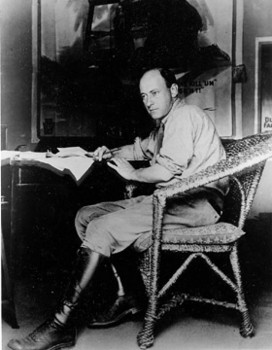
A New Novel Gives Cecil B. DeMille His “Close-Up” on the eve of Paramount Pictures’ 100th Anniversary: Best-selling author Robert Hammond celebrates Paramount Pictures’ 100th Anniversary with the release of his latest novel, “C.B. DeMille: The Man Who Invented Hollywood.” (New Way Press)
It seems that everyone in Hollywood is either talking about Paramount‘s upcoming 100th anniversary or giving out another award bearing the name of director Cecil B. DeMille. Well then it should come at no surprise to hear that award-winning author and screenwriter Robert Hammond, has released his latest novel entitled “C. B. DeMille: The Man Who Invented Hollywood.” In this novelization of the beginnings of director Cecil B. DeMille’s film career starting as a failed stage actor in the early 1900’s, Hammond goes into the director’s early family life in New York City, his relationship with his wife Constance, and young daughter “Ciddy” and peers into his evide nt character flaws. In C. B. DeMille: The Man Who Invented Hollywood, the reader will discover the true origins of the then burgeoning film industry and what led DeMille, to leave New York for a little known southern California town called ‘Hollywood,’ to follow his new calling as a film director.
Once out west DeMille thrives as the author describes how, along with Adolph Zukor and Jesse L. Lasky, they form ‘Famous Players-Lasky Corporation’ later changed to ‘Paramount Famous Lasky Corporation’ the forerunner to ‘Paramount Pictures Studios’. The novel is well written and encapsulates the great filmmaker’s Hollywood odyssey of excess, infidelity, redemption and reverence, leading him to be the most celebrated figure in entertainment history and the “Greatest Showman on Earth.”
“C. B. DeMille: The Man Who Invented Hollywood” has already been noticed by Hollywood and an adaptation of the novel has been in development to make it into a biopic feature film by producer Brandon Pender, through his Ithaca Entertainment Media Group (Indie Prod Co.) with author Hammond set to tackle the first draft of the screenplay. Earlier this August, the author Robert Hammond, released his first ‘DEMILLE’ themed book entitled ‘Ready When You Are: Cecil B. DeMille’s Ten Commandments for Success’ (New Way Press)
Los Angeles producers Gabrielle Evans-Fields and Brandon Pender are currently reaching out to prominent film directors and production partners as well as engaging in the process of attaching A-List talent to this groundbreaking endeavor. Evans-Fields says, Mr. DeMille is finally ready for his own close-up.” The biopic ‘C. B. DeMille: The Man Who Invented Hollywood’ is scheduled to be released in mid to late 2014.
info@newwaypress.com
www.cbdemille.com
Harrowing accounts of Sandy’s devastation to Chelsea Art District
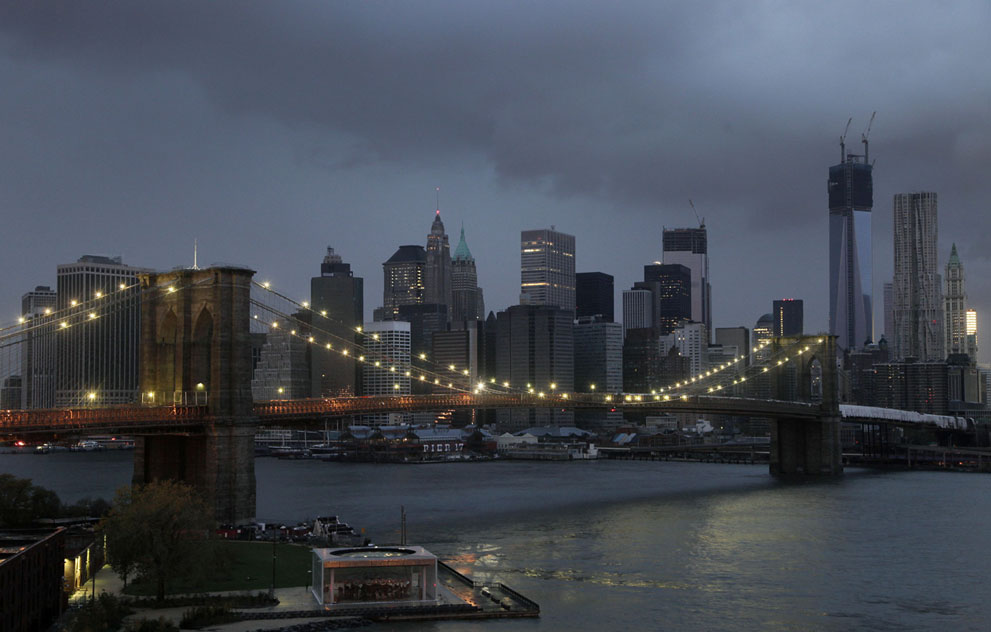
The lights on the Brooklyn Bridge stand in contrast to the lower Manhattan skyline which has lost its electrical supply, early on Tuesday, October 30, 2012, after megastorm Sandy swept through New York. A record storm surge that was higher than predicted along with high winds damaged the electrical system and plunged millions of people into darkness. (AP Photo/Mark Lennihan)
SALTZ’S DEVASTATING TOUR THROUGH CHELSEA’S RUINED ART GALLERIES
 By Jerry Saltz
 11/1/12

I live downtown, in the part of Manhattan without power. Like many, my nights
have been long, dark, cold, and unnervingly quiet. With no Internet access, cell
phone, or news I was antsy, and felt the urge to wander. On day two, wondering
how the galleries in Chelsea had weathered the storm, I seized the opportunity
to leave my apartment and head west. And when I got there, my art-heart sunk.

Widespread devastation was in painful evidence in scores and scores of ground
floor galleries between Tenth and Eleventh Avenues. Almost every ground floor
gallery had been inundated with four or more feet of water. All of the many
basement storage facilities were flooded. Computers and desk equipment were
wiped out. Reams and reams of irretrievable historical material stored in
notebooks and gallery files were washed away, destroyed. Sculptures, crates,
furniture, and paintings floated inside water-filled galleries, ramming walls
and other works of art. Whole shows were destroyed. Desks floated free. Glass
doors had shattered from the pressure of the water inside the galleries. Walls
already reeked of mildew or had rotted through.

 Damage to art has been far-reaching. I had to turn away when I saw Belgium
painter Luc Tuymans going into David Zwirner to inspect a waterlogged painting
of his. I watched outside Printed Matter as box after box of their own printed
editions and titles were brought up from the basement and thrown into dumpsters.
All lost. Outside, on almost all sidewalks, there were massive piles of
cardboard, plastic, and crates. Inside each of these containers had been
artworks that had been soaked. I  saw stunned gallerists un-framing works on
paper, setting them out to dry on any available surface. Other dealers in work
boots pushed crates out of spaces, onto the sidewalks, straight into dumpsters.
One woman drove in 50 five-gallon containers of gas from upstate to fill the
many pumping generators. Volunteer restoration experts went from gallery to
gallery to inspect works, separate the salvageable from the lost. It was an art
MASH unit. I saw paintings being carried from Friedrich Petzel's flooded 22nd
Street space to dry storage in his new space on 18th Street. From the outside it
looked as though a bomb had gone off inside 303 Gallery. Ditto many other
galleries. I saw torrents of water rushing out of Gagosian's cavernous 21st
Street space. When I ducked under the door I saw a large lone Henry Moore
sculpture standing in inches of water <http://tinyurl.com/bx3fuhy> . A
sub-ground level space on West 19th Street, filled as if it were a swimming
pool, had paintings floating in more than fifteen feet of water.

 I asked dealers if they had insurance. Most have it for the work. Some have it
for flood damage. Most don't have any insurance other than on the art. This
could spell the end of many galleries small and large.

 Many ridicule Chelsea galleries as flesh-eating pariahs. I think they're part
of our life blood, the collective organism that in many ways makes New York one
of the most thriving centers for art on earth. These ridiculed and reviled
galleries are places you can go for free, run by strange people with visions who
want to help artists by showing and selling their work. It's become an
international pastime to attack these galleries simply for being what they are:
large and commercial. I love them. All. More than ever.

 Walk through Chelsea in the next couple of weeks as clean-up and repair
continues. Notice that some spaces look so wrecked that it'll be extraordinarily
hard for them to get back on their feet. Many galleries will somehow have to try
and rebuild while getting through the next couple of months of not being open or
being able to show or sell art, all while still paying rent and bills. Even the
most cold-hearted gallery bashers should wish the best for all these galleries.
Every one. Palaces of art and mom-and-pop shows. Right now, along with much of
our beautiful city, Chelsea galleries are going through hell. A huge part of the
New York art world has suffered a colossal blow. Thinking about New York without
its density of galleries is like not being able to think about New York at all.
Grim.

Copyright © 2010 - 2012, New York Media

 NEW YORK'S CHELSEA ART GALLERIES SOAKED BY SANDy
Street-level spaces are prime real estate here, but rising water flooded many
sites, setting off a scramble to conserve art and clean property.

 By Meredith Blake and Jori Finkel, Los Angeles Times

 November 2, 2012

 Thursday is the customary night for art openings in Chelsea, the Manhattan
neighborhood that's home to the city's biggest concentration of galleries.

 But this Thursday, the black-clad scenesters were replaced by men in white
hazmat suits and surgical masks, and the only buzz came from generators.

 Chelsea is one of the many neighborhoods ravaged by super storm Sandy when it
made landfall Monday night. Although the human tragedy here pales next to the
horrors in Staten Island, where at least 19 people have died, the storm
delivered a serious blow to New York's contemporary art world, damaging dozens
of gallery buildings and many artworks they were designed to protect.

 Two days after the floodwater from the Hudson River had receded, the usually
chic neighborhood remained in disarray, with  drywall, plywood and wet sandbags
piled up next to 6-inch deep puddles. As indicated by the flood lines evident on
building exteriors, nearly every ground-floor gallery in the district suffered
some damage.

 In the hierarchies of the Manhattan art world, having a ground-floor gallery
south of 25th Street is considered a sign of success, prime real estate that
serious collectors could enter en route to blue-chip spaces like Gagosian or
Matthew Marks without taking a single stair or pushing an elevator button.

 Now the downside of the once-enviable ground-floor spaces in Chelsea has
become clear, with galleries farther south and west generally hit the hardest.
303 Gallery on West 21st Street and 11th Avenue looked like a war zone. On 19th
Street, employees bundled against the cold and clutching cups of coffee were
frantically at work outside the space owned by dealer David Zwirner, which was
flooded by 4 feet of water. One woman, perhaps out of frustration, smashed a
ruined telephone with a hammer.

On Thursday afternoon Leo Koenig was removing soaked drywall from his two
galleries on West 23rd Street. Because he and his staff had prepared diligently
by moving artwork off the ground, the damage he sustained was mostly to his
gallery. He said he lost only a few pieces of "sentimental value" and is now "in
a race against the clock" to eradicate mold and mildew.

Speaking of the damage to neighbors, he added, "I knew it was going to be
severe, but this is a catastrophe."

Just a block south, on West 22nd Street, Zach Feuer was hit much harder. His
gallery played host to the first solo show by artist Kate Levant on Oct. 19,
featuring several works on paper. Many dealers are not openly discussing their
losses pending talks with restorers, insurance agents and lawyers, not to
mention artists. But Feuer estimates that 20 of Levant's pieces — representing
at least a year of work — were destroyed when 5 feet of water from the Hudson
flooded his space.

Because the gallery, now littered with ruined hard drives and covered in a
layer of gray soot, sloped slightly downhill, Feuer's archives in the back of
the space were badly damaged. Upstairs, in an empty gallery lent to him by
neighbors, several hundred pieces of artwork were laid out on the floor to dry
before Feuer ships them to a conservator in Long Island.

Although he estimated that "nearly all" of his inventory was damaged in the
storm, Feuer remained stoic. Asked how he plans to rebuild, he replies with a
shrug: "I'll just keep working."

Another gallery in the path of the floodwaters was Sikkema Jenkins at 530 W.
22nd St., which opened a major show of Mark Bradford paintings on Oct. 27, the
Saturday before Sandy hit. But the gallery and artwork held up better than most.

Based in Los Angeles and home now ("I think I got the last flight out"),
Bradford reports that his gallery left his paintings — which run as large as 10
by 16 feet — hanging on the wall but swaddled them in industrial-strength
plastic wrap. He also tends to hang his work high. He thinks both factors may
have helped.

"I fully expected there to be some damage, but the works were fine," Bradford
said. "It was amazing. After a hurricane sometimes you'll see a whole street
taken out and just one house standing — it feels a little like that."

Blake reported from New York and Finkel from Los Angeles.
 Copyright © 2012, Los Angeles Times

 CHELSEA GALLERIES BEGIN RECOVERY WORK
 <http://tinyurl.com/b43rwkc>

 FOR GALLERIES, A TEST OF TENACITY
 By Roberta Smith

 Published: November 2, 2012

There are many pleasures to being an art critic in New York. One, in my view,
is definitely the late Saturday afternoon crunch in Chelsea, that day’s-end rush
through a last few galleries, seeing shows and squirreling away experiences and
ideas just before they all close for the weekend.

Drywall pulled from flooded galleries filling trash bins in Chelsea. The
neighborhood’s art dealers, some in tears, are salvaging what they can in the
aftermath of Hurricane Sandy.

I had a great final 60 minutes in Chelsea last Saturday and, consequently, one
of the last looks at what would suddenly become, on Tuesday, the old, pre-Sandy
Chelsea gallery scene. That day, as I started hearing reports of flooding in the
neighborhood, some of the art I had seen on Saturday became increasingly vivid
in my mind, as did the weird thought that I might be one of the last people who
would ever see it.

I had enjoyed Eberhard Havekost’s show at Anton Kern on West 20th Street, a
don’t-pin-me-down stylistic array that gave this German painter a sharper, slyer
edge than he had ever had for me. There were hard-edge abstractions, diaphanous
images of sunsets and one quirky, crusty Expressionist exercise that seemed
laden with enough paint to make the rest of the show.

On West 21st Street, a small new gallery named Guided by Invoices (talk about
sly) had been showing small abstractions on Masonite, enlivened by spurts of
spray paint and rugged lines that appeared to be more sawed than incised. They
were by a virtual unknown: Rafael Vega, a 2012 graduate of the School of the Art
Institute of Chicago, making his New York debut.

Farther down the block, Tanya Bonakdar Gallery had been offering an unusually
gimmick-free show by Olafur Eliasson, with photographs of Iceland’s hot springs
and volcanoes and a wall-to-wall floor piece made of large chunks of dark
obsidian, or volcanic glass. It was a welcome alternative to the immersive,
perception-distorting environments that have become an Eliasson specialty.

One of the most beautiful and surprising shows had been next door at Casey
Kaplan: a four-decade survey of the paintings of Giorgio Griffa, a little-known
Italian artist born in 1936 who had not shown in New York since the early 1970s.
His sparse, plain-spoken works constitute a kind of visual counting: simple
brush marks, lines or bands of radiant color applied one after another to
expanses of raw, unstretched canvas. They expanded history on several fronts for
me, adding to my understanding of European abstraction of the late 1960s,
speaking to the efforts of American painters as disparate as Alan Shields and
Agnes Martin, and presaging the low-tech painting of younger artists like Sergej
Jensen.

I had left Chelsea, as I often do, feeling a little high at the sight of
different kinds of art made at different points in artists’ lives: starting out,
continuing, approaching the end. Whatever you think of the actual art on any
given day in Chelsea, regulars to the neighborhood are privy to a lot of human
endeavor on the part of artists and art dealers. It is a gift.

That point was brought home with special intensity when I returned on
Wednesday and then again on Thursday, witnessing devastation everywhere, and
also the purposeful reaction to it. On Wednesday, to the thunderous clatter of
water pumps and generators, ashen-faced, sometimes teary-eyed art dealers, along
with their staff members and often their artists, were pulling sodden furniture,
computers and irreplaceable archival documentation and artworks from their dark,
water-blasted galleries.

There were huge piles of wet, crumpled cardboard on the street. “You know,
most people look at this and think it’s just cardboard,” said Michael Jenkins, a
partner in Sikkema Jenkins & Company, on West 22nd Street. “They don’t realize
that all of it was wrapped around works of art.”

At Bonakdar, there was no sign of the Eliasson photographs, just the long,
Donald-Judd-style wooden table and bench that have become friendly landmarks on
the ground floor, severely warped by water. At Kaplan, the front desk had
already been removed, and the Griffa paintings were, I was told, at the
restorer.

Everywhere there were signs of water’s relentlessness, but also odd
exceptions. At Guided by Invoices, which sits as far west as you can go on 21st
Street, on the corner of the West Side Highway, the Vega show was still hanging,
and the gallery was almost completely dry. Something — perhaps unusually
watertight gates — had saved it.

Anton Kern was locked when I went by, but through the window there were no
Havekost paintings to be seen, only what would become the increasingly familiar
sight of works on paper spread out on tables and the floor for drying.

I ventured north to find that the floods had not touched the galleries on West
29th Street, and then back down to 27th Street, between 11th Avenue and the West
Side Highway, where the string of small galleries nestled in the south side of
the old Terminal Warehouse building — Derek Eller, Wallspace, Winkleman, Foxy
Production and Jeff Bailey — had lost huge amounts of art when the building’s
common basement flooded.

At every turn there was evidence of salvage and conservation, as well as
rebuilding. Even on Wednesday workers were cutting away ruined drywall in
galleries so it could be replaced; on Thursday trucks from lumber yards were
delivering drywall and plywood. At CRG at 548 West 22nd Street, a floor that had
been slick with water on Wednesday was a day later arrayed with tables for
drying works on paper. Upstairs, where the Artist’s Book Fair was to have been
held this weekend but had been canceled, the space had been converted into a
kind of art hospital for drying out.

For all these efforts, it was easy to wonder, on first encounter, if Chelsea
would ever come back as an art district. And when I talked to dealers about what
they thought, reactions were mixed. Asya Geisberg, whose 23rd Street gallery was
flooded, said: “I worry about the longevity of Chelsea for smaller galleries. We
don’t have the staff or resources to deal with this.”

“My artists are helping me out,” she added. “Other people are helping me out,
but it’s not enough.”

On 22nd Street Andrew Kreps confirmed that he had lost most of his inventory
in his flooded basement, and my next, perhaps undiplomatic, question to him was
“Will you close?”

But his immediate reaction was “No.” James Yohe, another 22nd Street
gallerist, put it more romantically, “We’re here because we’re true believers.”

Mr. Kaplan said he was determined to reopen and to continue his Griffa show
when he did. “I have to do this for him,” he said, referring to Mr. Griffa.
“He’s been kind of written out of art history.”

“We won’t come back in the same way — we might be on one leg financially,” he
added. “But we will.”

His commitment was echoed on 19th Street, where David Zwirner was overseeing
an immense conservation effort spread, in his case, through three large spaces.
He said his faith in Chelsea was unshaken. Referring to both the density of
Chelsea’s galleries and their lack of entrance fees, he said, “It’s the craziest
freebie in the world.” He sounded as if he didn’t want to miss a minute of it.
 © 2012 The New York Times Company

HERE ARE MOMA’S CONSERVATION EMERGENCY GUIDELINES
> MoMA PS1′s director, Klaus Biesenbach, just tweeted the museum’s “emergency
guildelines for art disasters” for artists and dealers in need.
<http://tinyurl.com/b4c6bq7> _GalleristNY

SUPPLYING HARD-HIT CHELSEA GALLERIES WITH COFFEE AND DONUTS
 <http://tinyurl.com/cpxwv45>

Thanks to Candice Pulliam, Locate Fine Art,www.locatefineart.com for sending this to DAM.
The 35th Starz Denver Film Festival

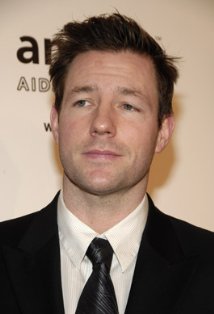
THE FITZGERALD FAMILY CHRISTMAS
WRITTEN & DIRECTED BY EDWARD BURNS
The Fitzgerald Family Christmas, previewed at the Film Center two days before the festival officially opened, was written and directed by Edward Burns, the Queens native known for his breakout movie, The Brothers McMullen, 1995, and his marriage to Christy Turlington, the model. Today he’s Spencer Tracey reincarnated.
The Family Christmas felt like an autobiographical film so it was not surprising to learn Burns’s middle name is Fitzgerald. That’s how deeply he understands the ferociously loyal Irish-Catholic family dynamics. If he didn’t live it daily growing up, his friends did and he took it all in. In fact, he believes he was preordained to lay bare the innards of New York’s working class families who live by one Irish-Italian-Catholic rule: family is everything.
In Burns’s new movie, The Fitzgerald’s are a family torn when Dad (Ed Lauter) left seven children and a wife to fend for themselves. Burns portrays the oldest son, Gerry, who takes on the responsibility of the absent father for the younger siblings and his mother. When the grandfather dies, he also halts his future to run the family owned Fitzgerald Tavern.
As Christmas, 2012, rolls around the clan’s patriarch surfaces with a benevolent request to spend Christmas day with his family. Rosie, (Anita Gillette) his ex-wife, was adamant when she heard his request, “I told him when he left he’d never step foot in this house again.” Twenty years later, she is still mad as hell. His children, especially the younger ones, wrote dad off long ago.
In the traditional holiday movies of yesteryear, immigrant families prove to be if nothing else, resilient, anchored by church and family. So it is with this year’s first holiday movie about the Fitzgerald Family.
There were no surprises, except for the scene with Connie’s (Caitlin Fitzgerald) nasty husband. I enjoyed the typical bantering among siblings; whether Irish-Catholic, living in New York or Los Angeles all children react emotionally when dealing with life and lousy fathers. In the Fitzgerald’s Christmas, bad-dad does an about face toward the family he abandoned years ago. The Fitzgerald’s comes to terms with their Christmas Day dilemma, even Rosie.
 denverartmatters.com